Our investment
Description of the investment.
Description of the investment.
This investment provides c.£3.75 million ($5.0 million) of flexible debt to Lovegrass, an Ethiopian agri-processing company specialising in teff-based flour, breakfast cereals and snacks for domestic and export markets, including the UK and Europe.
It marks the first commitment under BII’s Kinetic African Resilience Investment Facility (ARIF), which aims to increase investment in the real economy and critical infrastructure across frontier African markets.
BII’s financing will address Lovegrass’s key growth constraints, providing working capital and funding for capital expenditure. This will enable the company to scale operations, expand its product range and strengthen its position for future fundraising.
Impact information
Applies to investments made from 2019 onwards. The tabs in this section define what we expect to achieve through the investment, assessing the potential impact of the investment against six dimensions of impact. You can find more details on our methodology of assessing impact here.
Applies to investments made from 2019 onwards. The tabs in this section define what we expect to achieve through the investment, assessing the potential impact of the investment against six dimensions of impact. You can find more details on our methodology of assessing impact here.
What?
| Impact |
|---|
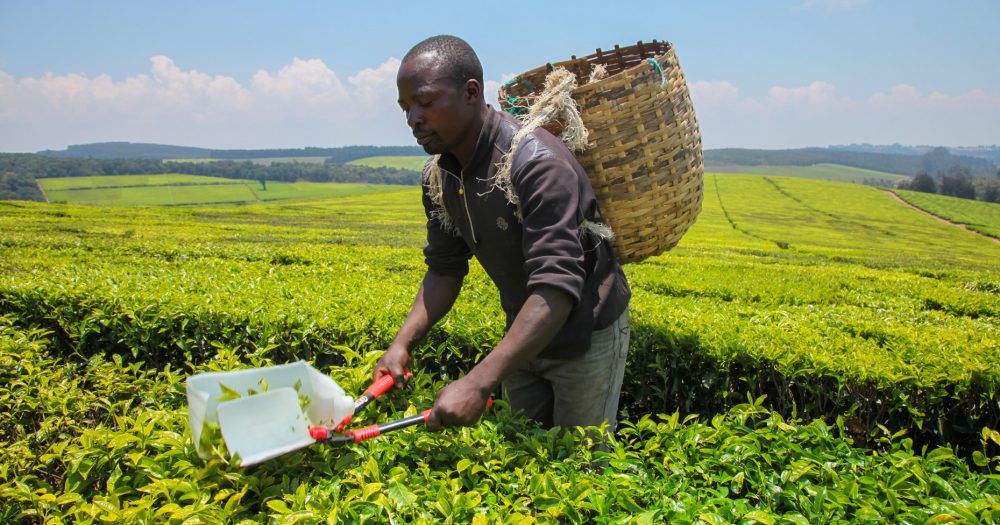
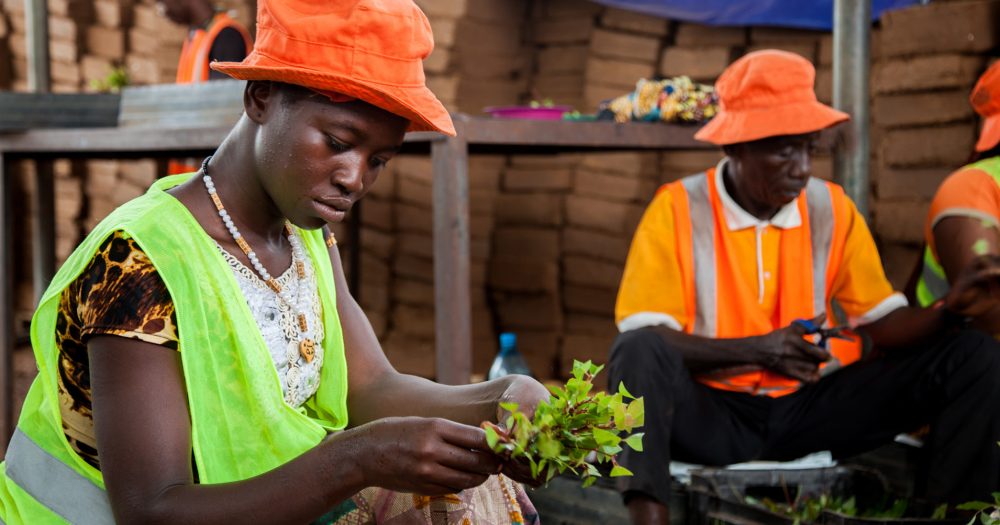
Lovegrass is an early-stage integrated agri-processing company producing teff-based flour, breakfast cereals and snacks for markets in Ethiopia and the UK. The company operates processing, packaging and warehousing facilities in Ethiopia, alongside warehousing and distribution in the UK. Around 90% of its teff is sourced locally. Of this, 42% is procured directly from more than 900 farming households, with the remainder sourced through intermediaries that indirectly engage around 1,000 farmers. This investment supports a business that creates jobs in agriculture and strengthens incomes across the value chain. By expanding processing capacity and market access, Lovegrass helps smallholder farmers and workers increase earnings and improve economic resilience. The company’s model is expected to benefit smallholder farmers, including women-led households, through more stable demand and improved access to markets. The investment also meets BII’s inclusion criteria, given its potential to create opportunities for underserved communities. |
|
|
How?
| Primary | Secondary |
|---|---|
|
Lovegrass works with more than 900 farmers in Ethiopia, around 28% of whom face significant constraints, including limited assets and extreme poverty. Many lack access to basic inputs, such as oxen for ploughing, and would otherwise lease out their land. Through the provision of farming equipment, improved seeds and training, the company enables these farmers to cultivate their own land and increase productivity. Lovegrass also offers the best offtake prices to farmers, helping to provide more stable and reliable incomes and support long-term relationships. |
24% of teff farmers directly sourced from are women (216 teff farmers) and indirect sourcing of teff from female farmers through intermediaries 57% of management roles are held by women 46% of employees are women |
Who?
| Stakeholder | Geography | Characteristics |
|---|---|---|
| Teff farmers in Ethiopia |
Ethiopia |
Initial analysis suggests that teff farmers working with the company earn around $20 per month on average and typically operate smallholdings of around two hectares. |
How much?
| Scale | Depth/Duration |
|---|---|
|
Over the next five years, the company aims to engage an additional 2,000 farming households. On average, each farmer currently supplies around 750kg of produce per year. The project aims to increase this by around 50% by improving yields. |
Contribution/additionality
| Contribution/additionality |
|---|
|
Market-level additionality: Access to finance remains a major constraint in Ethiopia. A recent IGC report identifies it as the most significant challenge for around 40% of businesses. Conflict and macroeconomic instability have further reduced lending capacity and worsened foreign exchange shortages across the local banking system. Need for capital: Lovegrass faces limited access to both working capital and capex financing, with local banks unwilling or unable to lend. This constrains the company’s ability to source and process teff. BII’s financing is expected to be catalytic, enabling the company to increase utilisation of its processing capacity (currently around 5–10%), expand production volumes and drive sales growth. Funding structure: BII’s facility is designed to address immediate working capital constraints and improve utilisation of the Ethiopian plant, supporting more stable revenues in the near term. The capex tranche will then support further expansion of production capacity, improving profitability and positioning the business for a stronger risk profile over time. |
Risk
Execution RiskExecution risk relates to macroeconomic factors in Ethiopia which continue to be volatile. |
Environmental and social information
-
Environmental and social summary
A high-level description of the environmental and social aspects of the investment. This may include a summary of key environmental and social risks identified during environmental and social due diligence (ESDD); key elements of an environmental and social action plan (ESAP); or ways in which we plan to support the investee improve environmental and social standards, such as through their environmental and social management system (ESMS); as well as any other priority areas agreed with the investee.
-
Environmental and social risk
A risk category rating, which indicates the level of environmental and social risk associated with an investment. For an explanation of the categorisations used, see here. We consistently provide an environmental and social risk category for all investments screened from 2023 onwards.
Environmental and social summary
This investment is rated Medium-High due to the drivers of inherent E&S risks a combination of contextual risks and typical E&S risks around mechanised food production and processing. An ESAP mitigation has been developed from a planned strong conflict-sensitive E&S management system, extensive stakeholder engagement practices and overall management engagement in E&S risk management.
Environmental and social risk
Medium-High
Reporting and Complaints Mechanism
The Reporting and Complaints Mechanism allows anyone outside BII to report alleged breaches of the business integrity or environmental and social provisions of BII’s Policy on Responsible Investing. This includes breaches made by BII, a BII investee, or a portfolio company of a fund in which BII has invested. The Reporting and Complaints Mechanism Rules are available here. Reports and complaints can be submitted by email to [email protected] or by mail. See more details on our Reporting and Complaints Mechanism here.
For any other general enquiries contact us at [email protected]
-
Key facts
- Last updated
:
When the last quarterly update of the website database occurred.
- June 2026
- Project number
:
An identifier number shared by investments in the same project.
- D7426
- Status
:
The current status of the investment (green flag for active and red flag for exited).
- Active
- Region
:
The geographical region where the country is located. We currently invest in Africa, South Asia, South East Asia and the Caribbean. In 2023, BII’s investment mandate was extended allowing it to invest in regional funds linked to Ukraine, with the majority of activity expected to begin post-war. Investments outside these regions were made prior to 2012 under previous investment mandates.
- East Africa
- Country
:
The countries where the investment delivers impact. Where impact is delivered in multiple countries, this is indicated.
- Ethiopia
- Sector
:
We prioritise those sectors that facilitate development and need our capital the most. Our priority sectors contribute towards many of the Sustainable Development Goals. They range from investing in the power infrastructure that will provide people with better access to electricity, to investing in financial institutions that direct capital to the individuals and businesses that need it the most.
- Business and consumer services
- Sub sector
:
The sub-sector that the investment is made into; this provides a more granular level of detail than the ‘sector’ information
- Agricultural Products & Services
- Investment policy :
- Kinetic
- Investment type :
- Debt
- Start date :
- December 2025
- Amount :
- $5m
- Currency of investment :
- GBP
- Domicile
:
The company or investment fund’s place of incorporation.
- United Kingdom
We provide capital in the following ways: directly – through direct equity, direct debt, guarantees and other non-intermediated financial instruments; and indirectly – principally through investment funds.
Type of investment portfolio that each investment is made under. Since 2014, we have run two investment portfolios: Catalyst and Growth. In addition, our Kinetic Portfolio enables us to manage concessional investment strategies.
For direct investments and fund investments, this is the date BII committed capital to the investments. This is typically the date on which legal agreements are signed by all parties.
For the portfolio companies of our fund investments, this is the date (either the month or the quarter) on which the fund committed capital to the portfolio company.
For direct equity investments, this is the date at which British International Investment exited the investment.
For debt investments, this is the date at which the final debt repayment was made.
For funds, this is the date at which the fund was terminated.
For underlying fund investments, this is the date at which the fund manager exited the investment.
The total amount committed, per financial instrument, per investment, on the date BII becomes subject to a binding legal obligation to provide funding or assume a contingent liability. This information is provided in US dollars.
For direct investments, this is the amount that BII has committed to the business or project. For fund investments, this is the amount BII has committed to the fund.
The currency in which the investment was made.
- Last updated
-
Gender and climate finance facts
- 2X gender finance
:
Indicates whether the investment is ‘2X qualified’ using the 2X Challenge criteria. You can find out more here. It only applies to investments made from 2018 onwards, when the 2X Challenge was first launched.
- Fully qualified
- 2X qualification criteria:
:
2X Criteria the investment qualifies under. See 2X Criteria for more information.
-
- Leadership — Senior Management
2X threshold 30%: Investee already meets threshold - Employment
2X threshold 25%: Investee already meets threshold - Governance and Accountability
- Supply Chain
- Leadership — Senior Management
- 2X sector
:
Indicates the specific 2X sector benchmark the investment qualifies under. See 2X Criteria for more information.
- Agriculture
- 2X country
:
Indicates the specific 2X country benchmark the investment qualifies under. See 2X Criteria for more information.
- Ethiopia
- 2X gender finance