Our investment
Description of the investment.
Description of the investment.
This $50 million senior climate loan to Vietnam Prosperity Joint-Stock Commercial Bank ('VPBank') is our first direct debt investment in Vietnam. Our investment will enable VPBank to finance climate-related projects of Vietnamese businesses, including SMEs. The investment will help reduce greenhouse gas (GHG) emissions and accelerate Vietnam’s transition to a low-carbon economy. We are investing alongside Export Finance Australia (EFA), FinDev Canada, Japan International Cooperation Agency (JICA) and SMBC (who also arranged the transaction) in a $350 million syndicated loan.
Impact information
Applies to investments made from 2019 onwards. The tabs in this section define what we expect to achieve through the investment, assessing the potential impact of the investment against six dimensions of impact. You can find more details on our methodology of assessing impact here.
Applies to investments made from 2019 onwards. The tabs in this section define what we expect to achieve through the investment, assessing the potential impact of the investment against six dimensions of impact. You can find more details on our methodology of assessing impact here.
What?
| Impact |
|---|
Avoid GHG emissions through increased access to clean energy services, energy efficiency, adoption of sustainable transport solutions, reduction of waste generation through recycling and improved sustainable agricultural practices (7.2, 12.5, 13.1). |
|
|
How?
| How? |
|---|
|
Direct: The loan will fund the bank’s Green Finance Programme, which lends to clients across segments, in particular for sustainable agriculture, clean transportation, recycling resources, waste management, and renewable energy. |
Who?
| Stakeholder | Geography | Characteristics |
|---|---|---|
| Planet |
Vietnam |
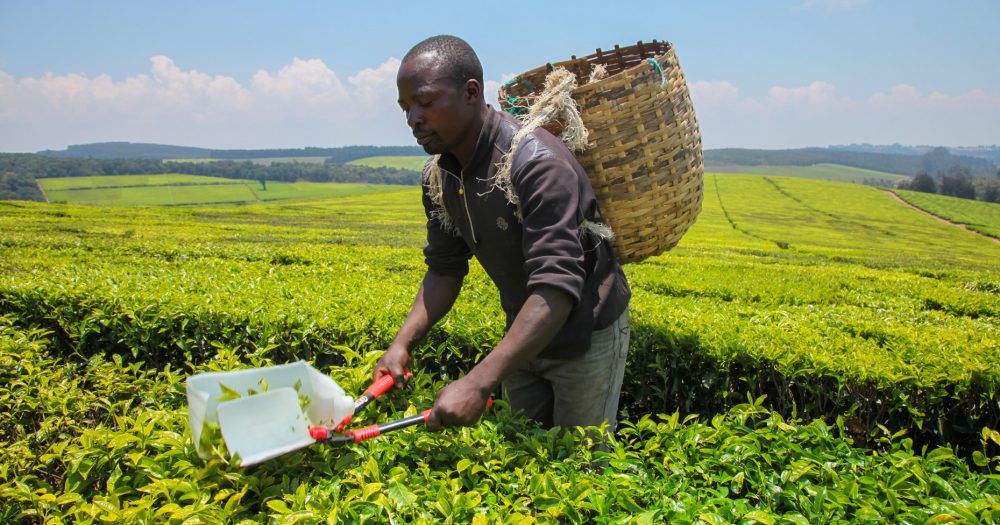
Vietnam has committed to net zero by 2050 and signed a Just Energy Transition Partnership (JETP) to reduce greenhouse gas emissions from 2030. Agriculture is an important sector of the economy (supporting 62% of rural people) but faces climate change challenges (e.g. contributing 14% of national net greenhouse gas emissions), and market fluctuations, requiring sustainable agriculture solutions. |
How much?
| Scale | Depth/Duration |
|---|---|
|
The pipeline of indicative borrowers includes eligible firms with average ticket size of $8 million. The bank aims for its green portfolio to add a further $450 million in climate assets between 2025-2026. |
Depth and duration are likely to be limited for working capital facilities (up to 50% of the line) and where term loans are extended, depth and duration are expected to be high, especially in places most affected by climate change. |
Contribution/additionality
| Contribution/additionality |
|---|
|
Our contribution is based on financial additionality given the current lack of long-term commercial funding. |
Risk
Drop-Off RiskThere is a risk of drop off for a proportion of borrowers (especially working capital facilities), so impact may be limited to lifetime of the loan for this segment. Execution RiskThe bank has ambitious growth plans, so a risk that it is unable to originate sufficient pipeline and there is a risk of double counting transactions reported to other lenders. To mitigate, we will monitor double counting as per our Impact Monitoring Plan. Alignment RiskThere is a risk that the transaction is not aligned to our impact framework. To mitigate, we received commitment from leadership, and the bank agreed to report in line with BII’s climate taxonomy. |
Environmental and social information
-
Environmental and social summary
A high-level description of the environmental and social aspects of the investment. This may include a summary of key environmental and social risks identified during environmental and social due diligence (ESDD); key elements of an environmental and social action plan (ESAP); or ways in which we plan to support the investee improve environmental and social standards, such as through their environmental and social management system (ESMS); as well as any other priority areas agreed with the investee.
-
Environmental and social risk
A risk category rating, which indicates the level of environmental and social risk associated with an investment. For an explanation of the categorisations used, see here. We consistently provide an environmental and social risk category for all investments screened from 2023 onwards.
Environmental and social summary
BII's investment in VP Bank is a directed lending for Climate Finance, the ESAP focuses on strengthening its current E&S due diligence process aligned with IFC PS requirements and need the Bank has agreed to put a coal transition plan in place, aligned to Vietnam’s net zero by 2050 target as required under BII’s Fossil Fuel Policy.
Environmental and social risk
Medium-High
Reporting and Complaints Mechanism
The Reporting and Complaints Mechanism allows anyone outside BII to report alleged breaches of the business integrity or environmental and social provisions of BII’s Policy on Responsible Investing. This includes breaches made by BII, a BII investee, or a portfolio company of a fund in which BII has invested. The Reporting and Complaints Mechanism Rules are available here. Reports and complaints can be submitted by email to [email protected] or by mail. See more details on our Reporting and Complaints Mechanism here.
For any other general enquiries contact us at [email protected]
-
Key facts
- First published
:
When the investment was first published on the website database.
- September 2025
- Last updated
:
When the last quarterly update of the website database occurred.
- June 2026
- Project number
:
An identifier number shared by investments in the same project.
- D6896
- Status
:
The current status of the investment (green flag for active and red flag for exited).
- Active
- Region
:
The geographical region where the country is located. We currently invest in Africa, South Asia, South East Asia and the Caribbean. In 2023, BII’s investment mandate was extended allowing it to invest in regional funds linked to Ukraine, with the majority of activity expected to begin post-war. Investments outside these regions were made prior to 2012 under previous investment mandates.
- Rest of the World
- Country
:
The countries where the investment delivers impact. Where impact is delivered in multiple countries, this is indicated.
- Vietnam
- Sector
:
We prioritise those sectors that facilitate development and need our capital the most. Our priority sectors contribute towards many of the Sustainable Development Goals. They range from investing in the power infrastructure that will provide people with better access to electricity, to investing in financial institutions that direct capital to the individuals and businesses that need it the most.
- Financial services
- Sub sector
:
The sub-sector that the investment is made into; this provides a more granular level of detail than the ‘sector’ information
- Banks
- Investment policy :
- Growth
- Investment type :
- Debt
- Start date :
- June 2025
- Amount :
- $50m
- Currency of investment :
- USD
- Domicile
:
The company or investment fund’s place of incorporation.
- Vietnam
We provide capital in the following ways: directly – through direct equity, direct debt, guarantees and other non-intermediated financial instruments; and indirectly – principally through investment funds.
Type of investment portfolio that each investment is made under. Since 2014, we have run two investment portfolios: Catalyst and Growth. In addition, our Kinetic Portfolio enables us to manage concessional investment strategies.
For direct investments and fund investments, this is the date BII committed capital to the investments. This is typically the date on which legal agreements are signed by all parties.
For the portfolio companies of our fund investments, this is the date (either the month or the quarter) on which the fund committed capital to the portfolio company.
For direct equity investments, this is the date at which British International Investment exited the investment.
For debt investments, this is the date at which the final debt repayment was made.
For funds, this is the date at which the fund was terminated.
For underlying fund investments, this is the date at which the fund manager exited the investment.
The total amount committed, per financial instrument, per investment, on the date BII becomes subject to a binding legal obligation to provide funding or assume a contingent liability. This information is provided in US dollars.
For direct investments, this is the amount that BII has committed to the business or project. For fund investments, this is the amount BII has committed to the fund.
The currency in which the investment was made.
- First published
-
Gender and climate finance facts
- Climate finance
:
Indicates whether the investment is climate finance qualified or partially climate finance qualified and the type of climate finance (adaptation, mitigation or both). We define climate finance using the multilateral development bank (MDB) and the International Development Finance Club (IDFC) Common Principles climate finance methodology. See Common Principles for Climate Mitigation Finance Tracking and Common Principles for Climate Change Adaptation Finance Tracking. We provide the climate finance qualification and type for commitments from 2020 onwards, which is when we launched our Climate Change Strategy.
- Fully qualified
- Climate finance type
:
Mitigation: Indicates investments which, by avoiding or reducing GHG emissions or increasing GHG sequestration, contributes substantially to the stabilisation of GHG concentrations in the atmosphere – at a level which prevents dangerous anthropogenic interference with the climate system consistent with the long-term temperature goal of the Paris Agreement
Adaptation: Indicates investments aimed at preventing or reducing the risks or vulnerabilities posed by climate change and increasing climate resilience. This includes both adapted activities and enabling activities to manage and reduce physical climate risks
Dual: Indicates investments directed towards activities contributing to both climate change mitigation and climate change adaptation and meeting the respective criteria for each category
The climate finance type of the investment is determined at time of commitment.
-
- Mitigation
- Climate finance