Our investment
Description of the investment.
Description of the investment.
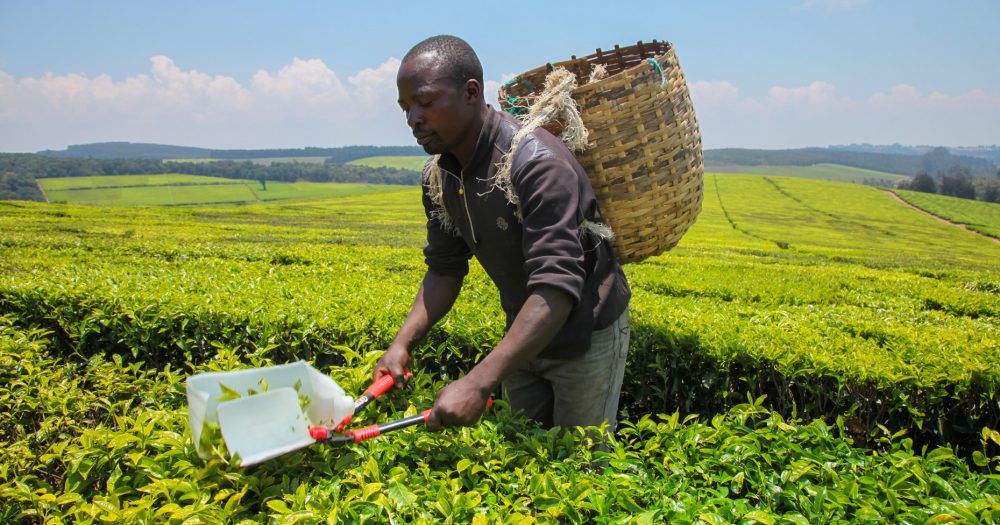
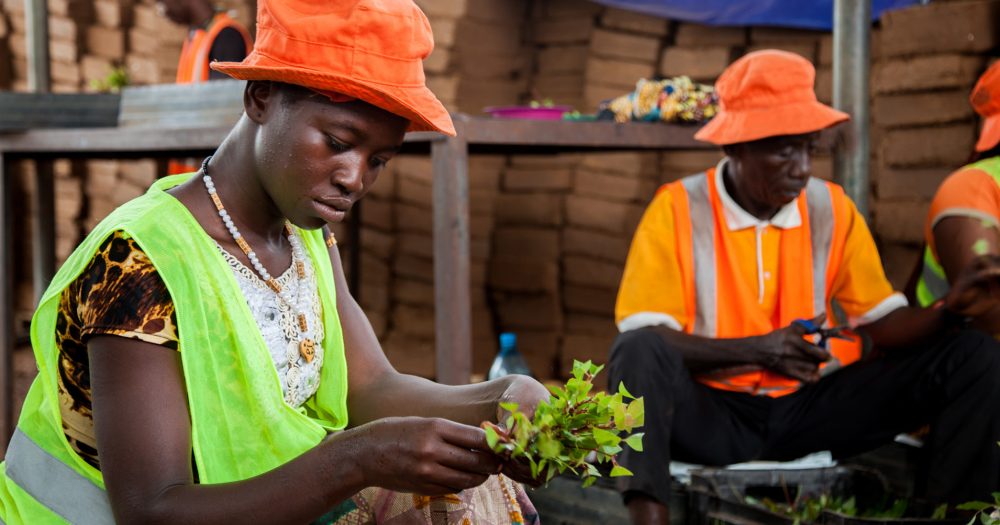
Through our investment in Vistaar, we aim to expand access to finance for low-income MSMEs and women-owned and led enterprises in India, helping to close the persistent credit gap that limits business growth and economic participation. By directing long-term capital to these underserved segments, we intend to strengthen the financing ecosystem for MSMEs, a sector that has historically struggled to mobilise sufficient commercial investment.
Impact information
Applies to investments made from 2019 onwards. The tabs in this section define what we expect to achieve through the investment, assessing the potential impact of the investment against six dimensions of impact. You can find more details on our methodology of assessing impact here.
Applies to investments made from 2019 onwards. The tabs in this section define what we expect to achieve through the investment, assessing the potential impact of the investment against six dimensions of impact. You can find more details on our methodology of assessing impact here.
What?
| Impact |
|---|
This transaction to Vistaar will expand credit access to low-income women-owned/led Micro, Small, and Medium Enterprises (WMSMEs) in rural and semi-urban regions of India. An estimated 50.7 million enterprises or 80% of MSMEs in India lack access to traditional lending channels. Our facility is expected to grow Vistaar’s low-income MSME book alongside directing proceeds to WMSMEs and offering impact-linked incentives to increase the proportion of WMSME in the total loan book (SDG 8.10, 9.3, 5a). |
|
|
How?
| How? |
|---|
|
Economic enabler: Our loan will support Vistaar to grow its low-income MSME & WMSME loan books. The Facility will be directed to grow the target segments (70% towards WMSMEs and 30% towards low-income businesses) with impact linked incentives offered for growing the proportion of WMSME book further in Vistaar’s portfolio. |
Who?
| Stakeholder | Geography | Characteristics |
|---|---|---|
| Owners and employees (of MSMEs) |
India |
Vistaar’s low-income book comprises 36% rural, 47% semi-urban, and 17% urban and the WMSME book is split 40% rural, 35% semi-urban and 25% urban. Key sectors for both books are services and trading. A quarter of low-income borrowers are new-to-credit and 58% are new to business-loans whereas 46% of WMSME borrowers are new to business-loans. |
How much?
| Scale | Depth/Duration |
|---|---|
|
Our loan is expected to increase lending to each target segment, reaching an average of ~1300 low-income Women-Owned/Led Micro, Small, and Medium Enterprises (MSMEs) and ~1250 WMSMEs. If the impact linked incentives are effective, this could increase reach up to ~18K additional WMSME. |
Duration: is at least the MSME loan tenor (avg. is 8.6 years for low-income MSMEs and 9.7 years for WMSMEs) but benefits are expected to be beyond that. Depth: Variable depending on the sector and characteristics of the stakeholders. Underserved segments (ex. new to credit customers) may have deeper impact. |
Contribution/additionality
| Contribution/additionality |
|---|
|
Our contribution arises from (a) directed lending to grow the low-income book beyond BaU, and (b) offering up to 25bps margin reductions as impact-linked incentives to increase the WMSME share beyond BaU. |
Risk
Execution RiskWe take comfort in Vistaar’s strategy to partner with MFIs that target borrowers graduating from group-lending and increase direct customer sourcing, to grow the low-income book. The effectiveness of proposed impact-linked incentives to increase the proportion of WMSME book remains to be seen. Evidence RiskGiven the intermediated nature of the transaction, there will be limited information on end stakeholders. We introduce use of proceeds clauses to build comfort and seek to get MIS data on stakeholders benefitting. Unexpected Impact RiskConsumer protection risks, given the vulnerability of Vistaar’s target segment. We take comfort in Vistaar’s practices related to customer engagement, acquisition, servicing, and collections to safeguard vulnerable customers |
Impact score
|
Impact score (at point of investment)
The Impact Score is a tool to help us manage our performance against our strategic impact objectives. It is designed to incentivise investments that support our productive, sustainable, and inclusive objectives. The Impact Score shown is based on the 2022-2026 Impact Score methodology. You can find out more here. The Impact Score is published for investments made from 2022 onwards. The Impact Scores are calculated at the point of investment. We publish the Impact Scores of new investments annually, once the information has been externally assured by an independent third party. |
|---|
7 |
Environmental and social information
-
Environmental and social summary
A high-level description of the environmental and social aspects of the investment. This may include a summary of key environmental and social risks identified during environmental and social due diligence (ESDD); key elements of an environmental and social action plan (ESAP); or ways in which we plan to support the investee improve environmental and social standards, such as through their environmental and social management system (ESMS); as well as any other priority areas agreed with the investee.
-
Environmental and social risk
A risk category rating, which indicates the level of environmental and social risk associated with an investment. For an explanation of the categorisations used, see here. We consistently provide an environmental and social risk category for all investments screened from 2023 onwards.
Environmental and social summary
We agreed on an ESAP with Vistaar to strengthen its ESMS and risk management process. The ESAP covers appointing a dedicated ESG officer; embedding our exclusion list and fossil fuel policy in the ESMS, credit policy and loan templates; adding clear use-of-proceeds controls with regular attestations; refining risk categorisation and requiring enhanced ESDD and action plans for higher-risk loans; and role-based training on fair collections and safeguarding (including GBVH) for staff and third-party agencies.
Environmental and social risk
Medium-High
Reporting and Complaints Mechanism
The Reporting and Complaints Mechanism allows anyone outside BII to report alleged breaches of the business integrity or environmental and social provisions of BII’s Policy on Responsible Investing. This includes breaches made by BII, a BII investee, or a portfolio company of a fund in which BII has invested. The Reporting and Complaints Mechanism Rules are available here. Reports and complaints can be submitted by email to [email protected] or by mail. See more details on our Reporting and Complaints Mechanism here.
For any other general enquiries contact us at [email protected]
-
Key facts
- Last updated
:
When the last quarterly update of the website database occurred.
- June 2026
- Project number
:
An identifier number shared by investments in the same project.
- D9121
- Status
:
The current status of the investment (green flag for active and red flag for exited).
- Active
- Region
:
The geographical region where the country is located. We currently invest in Africa, South Asia, South East Asia and the Caribbean. In 2023, BII’s investment mandate was extended allowing it to invest in regional funds linked to Ukraine, with the majority of activity expected to begin post-war. Investments outside these regions were made prior to 2012 under previous investment mandates.
- South Asia
- Country
:
The countries where the investment delivers impact. Where impact is delivered in multiple countries, this is indicated.
- India
- Sector
:
We prioritise those sectors that facilitate development and need our capital the most. Our priority sectors contribute towards many of the Sustainable Development Goals. They range from investing in the power infrastructure that will provide people with better access to electricity, to investing in financial institutions that direct capital to the individuals and businesses that need it the most.
- Financial services
- Sub sector
:
The sub-sector that the investment is made into; this provides a more granular level of detail than the ‘sector’ information
- Specialized Finance
- Investment policy :
- Growth
- Investment type :
- Debt
- Start date :
- December 2025
- Amount :
- $45.05m
- Currency of investment :
- INR
- Domicile
:
The company or investment fund’s place of incorporation.
- India
We provide capital in the following ways: directly – through direct equity, direct debt, guarantees and other non-intermediated financial instruments; and indirectly – principally through investment funds.
Type of investment portfolio that each investment is made under. Since 2014, we have run two investment portfolios: Catalyst and Growth. In addition, our Kinetic Portfolio enables us to manage concessional investment strategies.
For direct investments and fund investments, this is the date BII committed capital to the investments. This is typically the date on which legal agreements are signed by all parties.
For the portfolio companies of our fund investments, this is the date (either the month or the quarter) on which the fund committed capital to the portfolio company.
For direct equity investments, this is the date at which British International Investment exited the investment.
For debt investments, this is the date at which the final debt repayment was made.
For funds, this is the date at which the fund was terminated.
For underlying fund investments, this is the date at which the fund manager exited the investment.
The total amount committed, per financial instrument, per investment, on the date BII becomes subject to a binding legal obligation to provide funding or assume a contingent liability. This information is provided in US dollars.
For direct investments, this is the amount that BII has committed to the business or project. For fund investments, this is the amount BII has committed to the fund.
The currency in which the investment was made.
- Last updated
-
Gender and climate finance facts
- 2X gender finance
:
Indicates whether the investment is ‘2X qualified’ using the 2X Challenge criteria. You can find out more here. It only applies to investments made from 2018 onwards, when the 2X Challenge was first launched.
- Partially qualified : 70%
- 2X qualification criteria:
:
2X Criteria the investment qualifies under. See 2X Criteria for more information.
-
- Leadership — Board of Directors/Investment Committee
2X threshold 30%: Investee commits to meet threshold - Indirect/Portfolio
2X threshold 30%: Investee already meets threshold - Governance and Accountability
- Leadership — Board of Directors/Investment Committee
- 2X sector
:
Indicates the specific 2X sector benchmark the investment qualifies under. See 2X Criteria for more information.
- Financial and Insurance Activities
- 2X country
:
Indicates the specific 2X country benchmark the investment qualifies under. See 2X Criteria for more information.
- India
- 2X gender finance