Globally, an estimated 1-3 billion people live with unreliable or poor-quality electricity. In sub-Saharan Africa, 600 million people do not have access to power. Access to reliable, affordable, and quality electricity is not only a key enabler of economic growth but also a cornerstone in lifting millions from poverty, enhancing livelihoods, and empowering marginalised groups, including women. It enables more efficient business operations and enhances productivity, as well as better access to healthcare, education and much more.
At BII, power infrastructure is one of the key sectors we invest in. In 2023, our portfolio generated 59 terawatt hours of electricity, equivalent to 18 per cent of the total electricity generated in the UK in 2022.
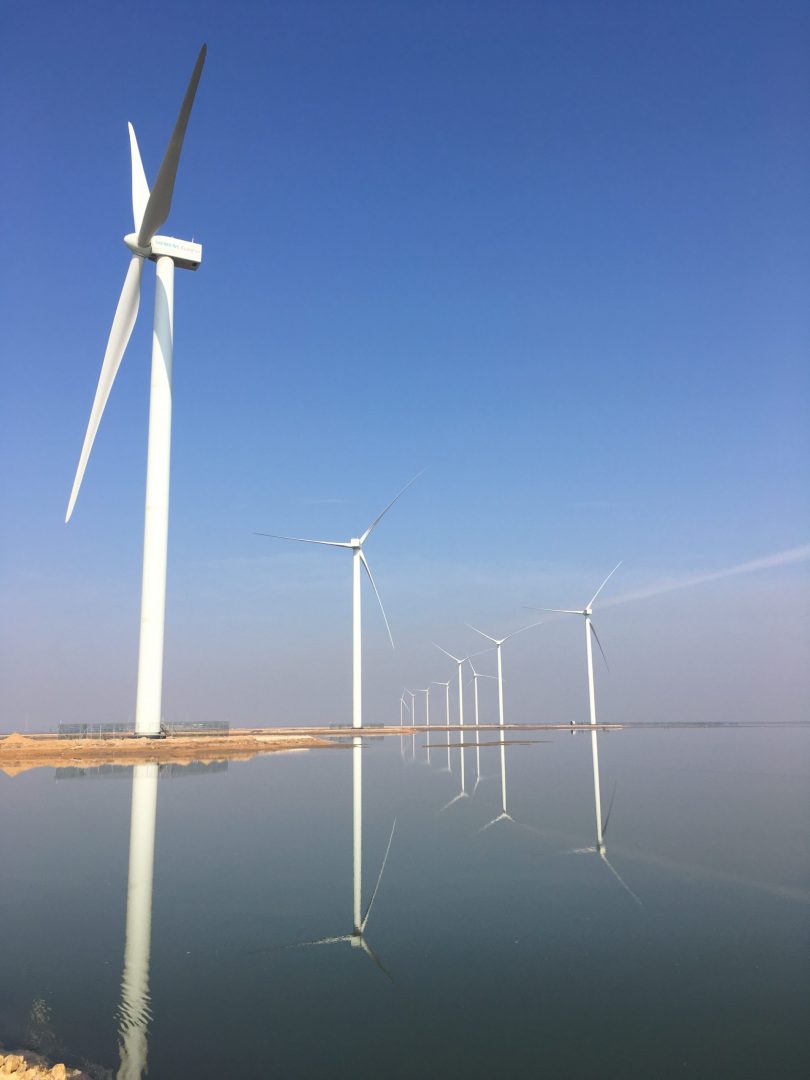
Our investments span various types of power infrastructure, from large-scale projects like the Benban Solar Park in Egypt – one of the world’s largest solar parks, visible from space – to off-grid solar energy companies like Lumos in Nigeria, which provides solar home systems to families and businesses, often granting them access to power for the first time.
Inclusion is a priority for us. We aim to ensure our investment reaches those most in need. Our latest study explores the complex relationship between large-scale power sector investments and improved inclusion in the countries where we invest. It examines the potential to enhance poverty alleviation and living standards for women, and people living on less than $6.85 per day, (based on 2017 purchasing power parity) through utility-scale generation, commercial and industrial embedded generation, transmission and distribution, and smart metering.
The findings presented in this report offer critical insights into how different dimensions of power access—whether in terms of availability, reliability, or affordability—affect the financial and social well-being of individuals, households, and firms in low-income and emerging economies. With over 675 million people lacking access to electricity and over three billion living below $6.85 per day, much of the evidence gathered here underscores the importance of both improving access to power and enhancing the quality of existing electricity supply, especially in rural and underserved regions.
One of the key revelations of this study is that while access to power alone does improve living standards, it is the reliability of power supply that drives the most significant transformations in income, employment, and productivity, particularly in the long term. Power is not just a commodity—it is a catalyst for broader economic and social changes, with tangible impacts on everything from firm productivity to gender equality. However, the report also highlights the challenges and trade-offs involved. While improving access to energy can raise living standards, it is often the improvement in the quality and reliability of power that makes the most substantial difference in reducing financial poverty.
The study emphasises the need for tailored investments that prioritise high-quality, reliable power supply in contexts where the energy grid is already functioning but where large populations still live in poverty. Such investments can have ripple effects, supporting both households and businesses, especially those in regions with growing economic opportunities.
Lastly, this report calls for further research to understand how best to harness the inclusive benefits of power access, particularly for women. As we strive for more equitable outcomes, it is clear that energy access, when paired with the right infrastructure and policies, has the potential to be a transformative tool for socio-economic empowerment.
We hope that this study will contribute towards the ongoing dialogue on energy access, poverty reduction, and sustainable development. It not only reinforces the need for increased investment in energy infrastructure but also serves as a guide for policymakers and impact investors committed to driving inclusive, long-term growth in some of the world’s most vulnerable regions.