Tackling the hardest development problems such as climate change and lack of energy access, and in some of the toughest operating environments, requires a level of creativity and resilience. It is the foundation for building world class businesses. Many are found in Africa.
Take African fintechs for example. They developed nimble, user-friendly mobile money and payments solutions years before developed markets because traditional banking excluded so many people in the continent.
Across the continent, world class businesses in a range of sectors are emerging, but the vast majority remain under the radar as the growth capital they need to achieve scale remains scarce.
Black-owned and led businesses in Africa face a persistent funding gap
Impact investors have traditionally defined impact through the lens of the customers or clients and employees of a business. They have focused on inclusion of marginalised communities rather than considering the ownership and leadership of these businesses as a multiplier of impact.
It’s a blind spot. We know that the calibre and potential of Black-owned and led businesses in sub-Saharan Africa is not matched by the funding they receive, and this is well documented. Analysis by the Guardian in 2020 found that of the top ten African-based startups that secured the highest amount of venture capital in the continent in 2019, eight were led by foreigners.
Another finding from the Google Black Founders Fund revealed that only 3.11 per cent of all investment in Africa was made into Black founders since 2000 ($413m out of $13.3bn).
I’ve been there myself. Nearly 15 years ago I was part of the founding team to establish the first West African owned and managed infrastructure fund. I spoke to numerous non-African institutional investors over four years of fundraising, and when we eventually secured the funding, not a single investor was from outside the continent.
The individuals and institutions that understood our value proposition and strategy and believed in us were all African. Yet during the same period, internationally based infrastructure funds focused on Africa managed to raise funding from international investors. The investment case beyond the obvious development benefits of infrastructure, such as financial returns and the lowest default rates for infrastructure assets in the world – was clearly compelling, yet something was getting lost in translation or our pitch!
Many African founders engaging international investors find there is an undue focus in the conversation on the role of Politically Exposed Persons (PEPs) in the business. When we met international investors and discussed projects, PEPs were always a key focus of discussion. This implies a belief that competitive advantage is linked to perceptions of preferential treatment and/or corruption.
Another common experience is the overreliance on institutions such as Oxbridge or Ivy League schools to confer credibility. African founders who have not attended these schools but are just as smart – or indeed smarter – may not use the polished language the investors expect and despite the strength of their value proposition and business model, they fail to win confidence or capital.
In other instances, there is a perception that Black-owned and led businesses are higher risk, due to their perceived lack of readiness to navigate rigorous investment processes. Yet recent data published in 2024 by the Global Emerging Markets Risk Database (GEMS) Consortium suggests otherwise. Average default rates in emerging markets from 1994-2022 is 3.5 per cent, in line with average default rates observed in companies with a B credit rating by S&P (3.4 per cent) and a B3 by Moody’s (4.0 per cent).
This is a missed investment opportunity for several reasons. Beyond the disconnect between perceived and actual risk, there is also an under appreciation of the upside.
Local and indigenous entrepreneurs can see firsthand the development challenges that need to be addressed within their communities and are often best placed to provide workable and scalable solutions. They also tend to be more committed to the region because it’s not a “market”, it is their home. Local entrepreneurs don’t pull out in economic downturns and by weathering periods of intense pressure and volatility, they build resilience. As soon as conditions become more conducive, they can scale faster.
Africa’s working age population is expected to grow by 450 million by 2035, the fastest in the world. With this growth, it is projected that African workers will become the most valuable labour pool in the world. The inequity in funding is potentially missing out on a significant amount of talent.
A systems shift is needed - working together, we can accelerate progress faster and deeper
Across the impact investment ecosystem – from DFIs to private equity and from venture capital funds and the philanthropic community – there is increasing recognition of the need to take a more diverse approach to allocating capital.
As a long-term partner to businesses in Africa, we are stepping up our approach. Investing inclusively is already embedded in BII’s investment strategy, and we have committed to increase the representation of Black-owned and led businesses in our sub-Saharan Africa portfolio over our 2022-2026 strategy period. We’re also pooling our knowledge and sharing our pipeline with other DFIs, so we can increase capital flows to Black-owned and led businesses faster than we could if we acted independently.
Our commitment to increasing investment to Black-owned and led businesses
We constantly assess the investment landscape and wherever we identify funding gaps, we create new platforms and partnerships to ensure capital flows to where it is needed most and where it can create the most impact.
We invest through funds and we make direct investments into Black-owned businesses .
Summit Africa is a specialist black-owned and managed investment manager and licensed Financial Services Provider. BII backed its first impact-focused private equity fund – Summit Fund I – which invests in SMEs in rural and peri-urban areas in South Africa. It focuses on key sectors including education, healthcare and financial services to improve access and affordability for hard-to-reach communities.
The fund has provided much needed funding to over 10,000 SMEs in South Africa, provided critical healthcare services to nearly 14,500 patients in peri-urban, township and rural areas and provided affordable and quality tertiary education and training to about 2,000 people from mainly disadvantage backgrounds.
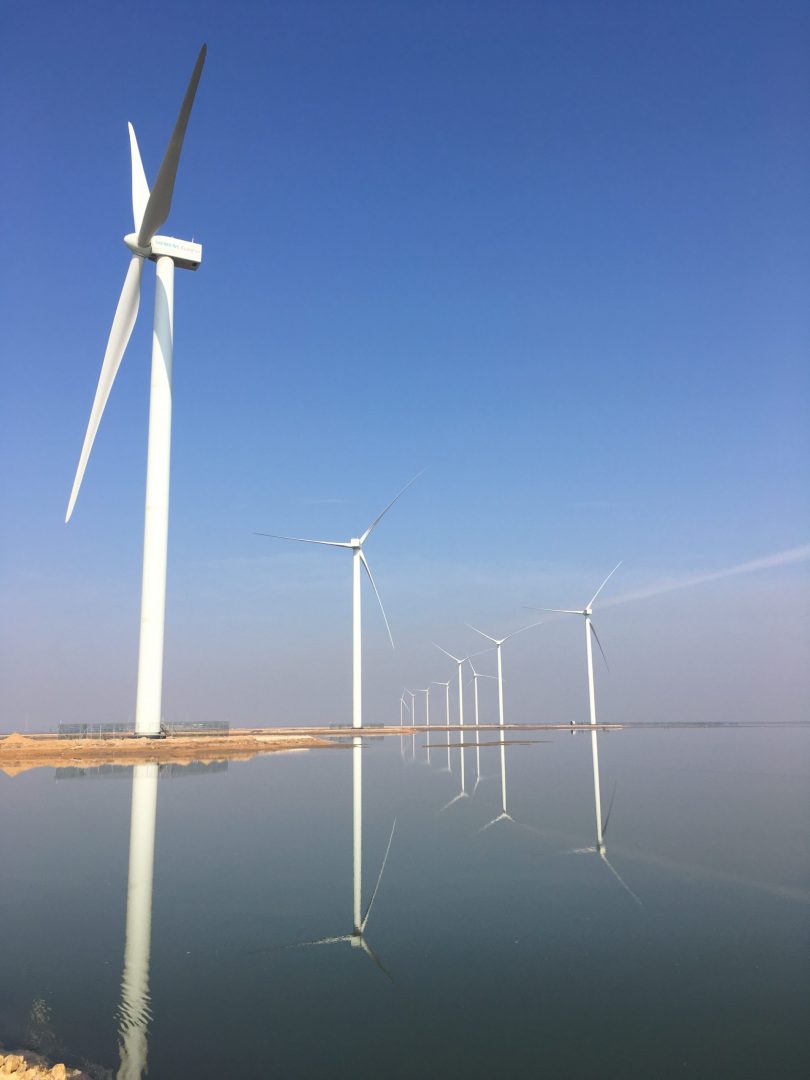
H1 Capital is a South African Black-owned and managed renewables investment and development company that is expanding access to clean and affordable energy in the country. Our investments in H1 are helping to meet power shortage needs and to decarbonise the power sector in South Africa.
Inclusion is a priority for H1 Capital as it provides clean energy solutions that are improving the quality of life and livelihoods of marginalised groups in South Africa. Its goal is to provide cleaner energy to about 2 million households by 2035.
We have developed platforms to offer new capital solutions tailored to SMEs, which make up the majority of the private sector in sub-Saharan Africa and are mainly Black owned.
Growth Investment Partners (GIP) Ghana is a company set up by BII and led by Ghanaians to provide long-term and mainly local currency financing to SMEs who are the lifeblood of the Ghanaian economy. SMEs account for over 90 per cent of business enterprises, 60 per cent of the country’s GDP and 80 per cent of all employment. Yet they face many challenges accessing capital. BII created GIP to provide a unique and lasting solution to meet the needs of local businesses and deepen their contribution to the Ghanaian economy.
We are not just picking winners but also building the field. We are preparing Black-owned and led businesses for investment by providing technical assistance support in areas such as ESG compliance to ensure a higher number of businesses are able to secure funding.
Ghana Investment Support Programme (GISP) is a BII funded technical assistance programme created to increase investment flows to SMEs in Ghana. GISP supports businesses to be more investment ready by helping them to improve financial management, environmental, social and governance practices and more. It also works with partners to address ecosystem challenges around investing in SMEs.
We are also accelerating progress within BII’s own operations. We have grown locally led origination teams and we are commissioning industry research on the barriers and opportunities to accelerate investment to Black-owned and led businesses. We are working to achieve greater diversity within BII’s leadership and increase African representation on our investment committees so we can better understand and meet the market’s needs.
By backing talented business owners and leaders with local roots, we are creating a ripple effect of positive change, that not only benefits individual businesses but also empowers entire communities